


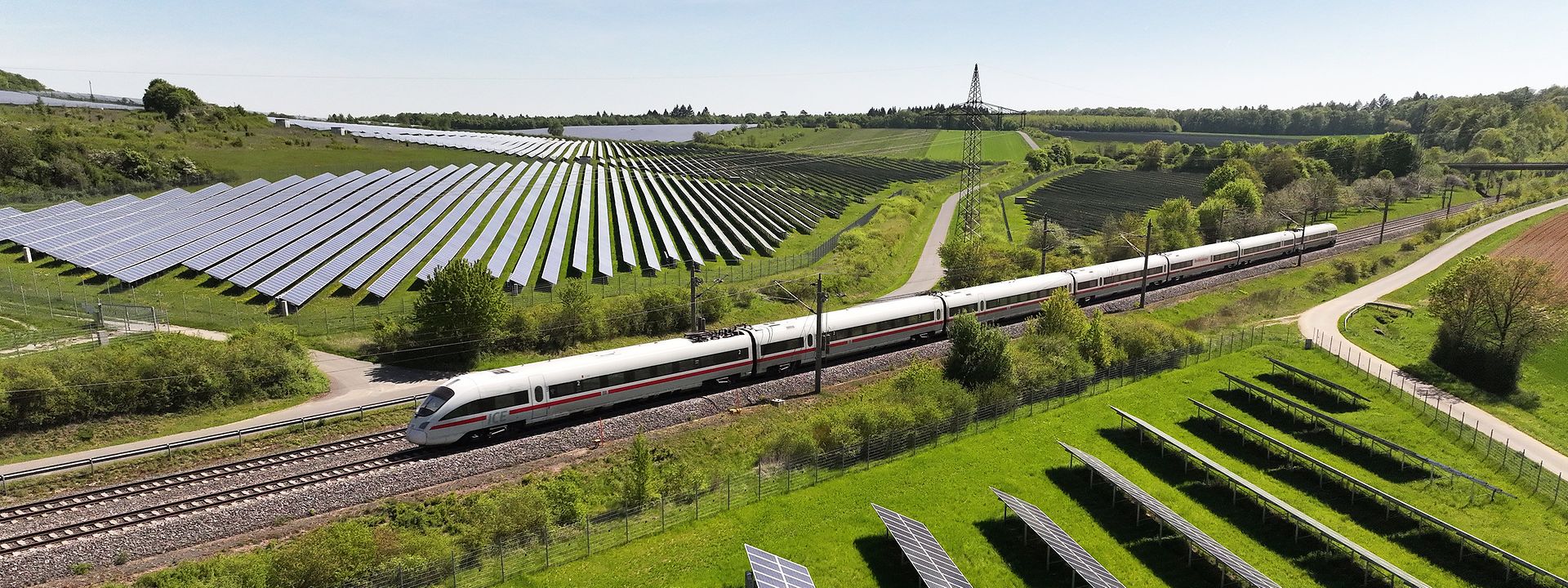
Climate protection at Deutsche Bahn
Transporting more people and goods by rail is a key factor in achieving German and European climate protection goals. After all, according to TREMOD data from the Federal Environment Agency, electrified rail transport is already one of the most climate-friendly forms of mass transit today. Deutsche Bahn aims to further build on this competitive advantage and support its customers in achieving their own climate protection goals.
Deutsche Bahn has committed to reducing its greenhouse gas emissions across the entire value chain to net zero by 2040. This goal is supported by an implementation plan and validated by the renowned and independent Science Based Targets initiative (SBTi). In its decarbonization strategy, DB adheres to the SBTi's science-based net-zero standard, thereby following a 1.5-degree path.
The SBTi Net-Zero Standard
The SBTi's net-zero standard is the world’s leading framework for businesses to set science-based climate targets. In line with this framework, DB aims to cut Scope 1–3 emissions by at least 90 percent from 2019 levels by 2040. Only hard-to-avoid residual emissions (a maximum of 10 percent) will be neutralized — removed from the atmosphere and permanently bound using technological or nature-based solutions.
In addition to its net-zero goal by 2040, DB has interim targets confirmed by the SBTi:
- In its own operations: By 2034, Deutsche Bahn will reduce its absolute greenhouse gas emissions in Scope 1 and 2 by 63 percent compared to 2019.
- In the upstream and downstream value chain: By 2034, Deutsche Bahn will reduce absolute emissions from energy- and fuel-related activities (Scope 3.3) by 40 percent and emissions from the use of sold fossil fuels (Scope 3.11) by 63 percent. Furthermore, by 2029, 66 percent of suppliers (by emissions volume) of the DB Group’s purchased goods, services, and capital goods (Scope 3.1/3.2) will have adopted science-based emissions targets — a so-called Supplier Engagement Target.
Deutsche Bahn is advancing decarbonization with business-unit-specific reduction pathways based on absolute greenhouse gas emissions. It has identified four specific levers to achieve its net-zero targets according to SBTi.
Renewable energy
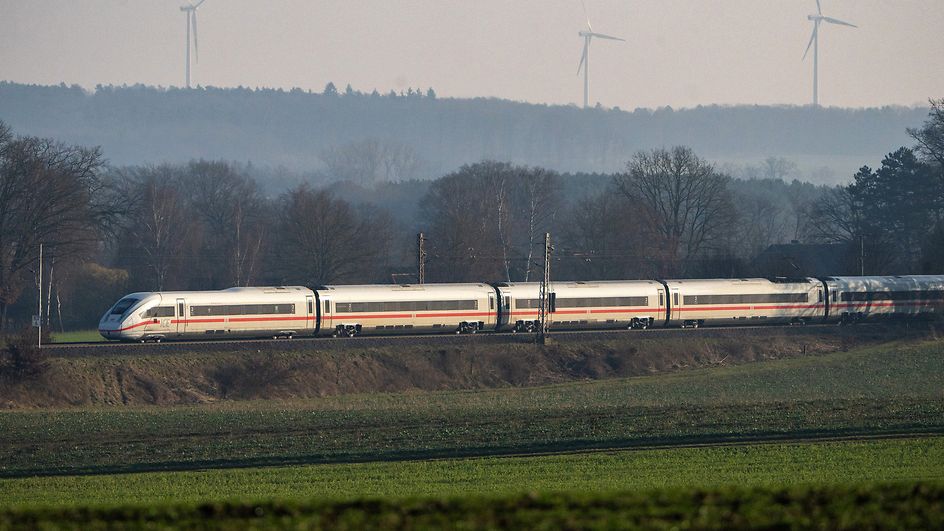
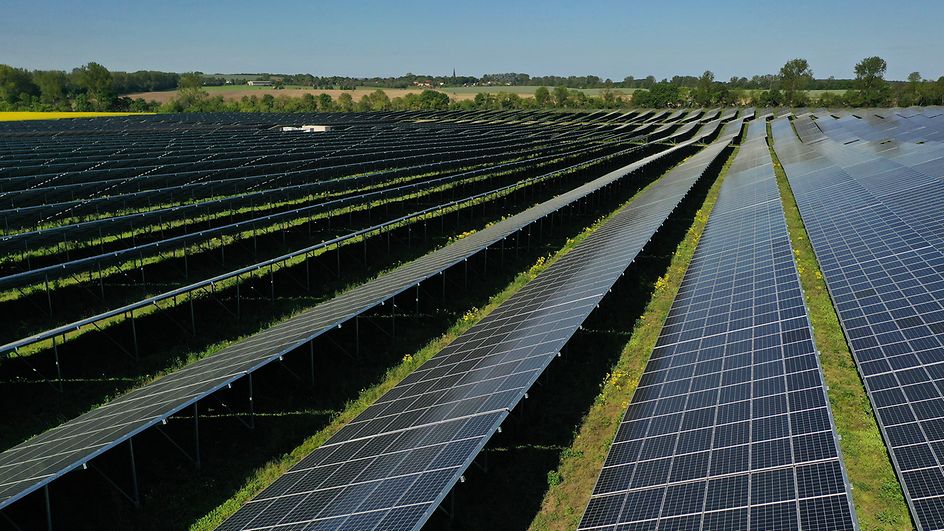
Traction power: Renewable energy already accounts for 71.5 percent of DB’s rail power mix (as of 2025). For example, long-distance travelers on DB trains in Germany have been traveling on 100 percent green electricity since 2018. And DB customers also travel on renewable energy in commuter rail services, such as the Hamburg and Berlin S-Bahn. In Baden-Württemberg and Schleswig-Holstein as well, passengers on regional and commuter rail services travel using 100 percent green electricity, provided the rail transport is powered by electric traction.
Stationary facilities: Since early 2025, all train stations, maintenance depots, office buildings, and facilities in Germany supplied by DB Energie have been powered by 100 percent green electricity. This also includes signal boxes, switch heating systems, and track lighting.
Phase out of diesel and advancing electrification
Electrification: As part of its path to net-zero, DB is also focusing on further electrification of its rail network as part of its decarbonization strategy. Already today, more than 90 percent of all rail transport services in Germany are powered by electricity (based on ton-kilometers of freight; Ltkm). However, there will continue to be routes in the future where, due to geographical or operational constraints, freight and passengers cannot always be transported to their destinations using electric power. On these routes, DB is therefore adopting a technology-neutral approach that utilizes alternative drive systems and fuels as substitutes for fossil diesel.
Use of alternative fuels: Alternative fuels allow diesel vehicles to continue operating without the need for technical retrofitting. This is sustainable and conserves resources because fully functional trains and locomotives do not have to be taken out of service prematurely. DB is currently focusing on HVO (hydrotreated vegetable oil) as a transitional technology. The increased use of this biofuel will significantly reduce the demand for conventional diesel in the coming years. The HVO used by DB is produced exclusively from biological residues and waste materials and, on a net basis, generates approximately 90 percent fewer greenhouse gas emissions than conventional diesel.
Use of alternative drive systems: Alternative drive systems are low-emission alternatives to pure diesel drive systems. Among other things, battery-powered trains and the associated infrastructure are being used. Battery-powered trains have an on-board accumulator that functions like a rechargeable battery. On non-electrified routes, the train draws its power from the charged battery, allowing it to operate in an environmentally friendly manner even without overhead wires.
Efficient energy use
Deutsche Bahn does not merely aim to continuously increase the share of green electricity within the group. It also aims to use the energy it consumes as efficiently as possible. This not only has a positive impact on DB’s finances but also results in significant reductions in greenhouse gas emissions.
Efficient vehicles: To increase the energy efficiency of its fleet, DB is focusing, among other things, on passenger-independent air conditioning control, training train operators in energy-efficient driving, and feeding braking energy back into the overhead lines. In addition, the technical foundations for future energy-efficient processes are being laid.
Efficient buildings and facilities: To increase the efficiency of stationary assets, DB is automating manual tasks and optimizing processes. For example, self-closing warehouse doors help reduce heat loss and save heating energy. The introduction of innovative paint systems that dry at room temperature also leads to savings in energy costs and greenhouse gas emissions.
Heat transition: On the path to net-zero emissions, DB also aims to phase out the use of fossil fuels for heating. To this end, it is working on various concepts and measures. When oil-fired heating systems reach the end of their life cycle, they are not simply replaced but are substituted with climate-friendly alternatives, such as biomass systems.
Low-emission building materials
In the coming years, Deutsche Bahn will be investing heavily in a reliable infrastructure. To reduce the greenhouse gas emissions generated in the process, DB is testing low-emission building materials. These materials are characterized by innovative and resource-efficient production processes as well as the use of recycled materials. In doing so, DB is also relying on partnerships such as the Future Initiative for Rail Construction (ZIB).

 Go
Go