


Deutsche Bahn AG has committed to reducing its greenhouse gas emissions across the entire value chain to net-zero by 2040. This goal is backed by an implementation plan and has been validated by the renowned and independent Science Based Targets initiative (SBTi). As part of its decarbonization strategy on the path to net-zero, DB is focusing, among other things on the use of alternative drive systems—including on the road. As a result, electric buses are being deployed at various locations throughout Germany.
Electric buses on frankfurt’s route network
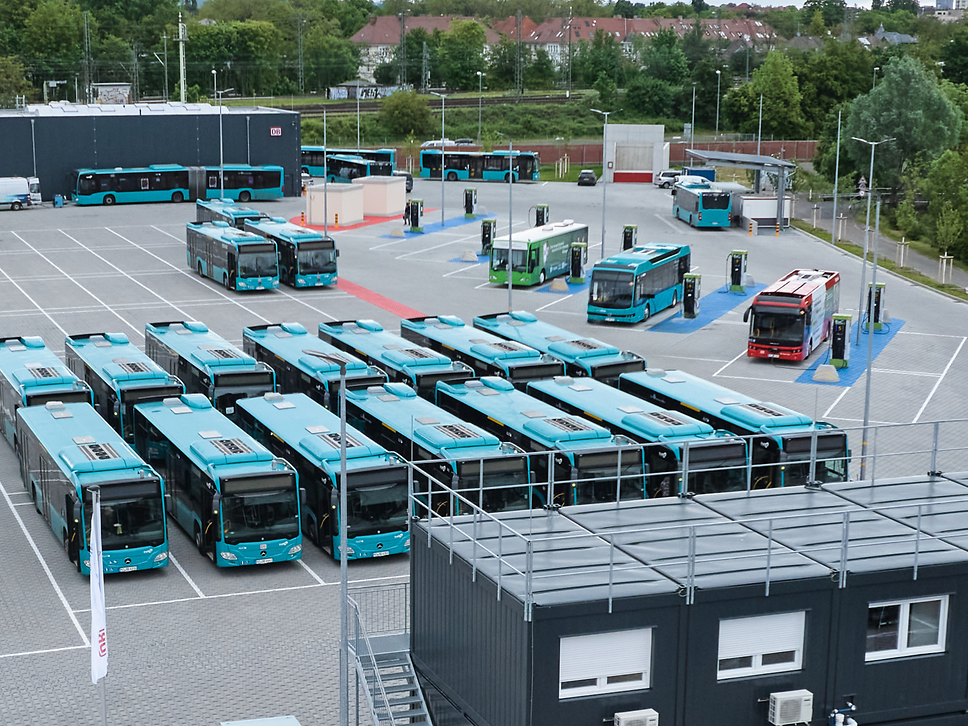
In Frankfurt am Main, DB is deploying electric buses and, at the same time, providing the necessary charging infrastructure. Together with DB Energie GmbH, DB Regio has installed the charging infrastructure at the newly built bus depot in the Höchst industrial park. There, the electric buses can be charged using electricity generated from renewable energy sources.
Electric buses in Schleswig-Holstein
In Schleswig-Holstein, low-floor electric buses are in service with DB subsidiary Autokraft in Bad Segeberg, St. Peter Ording, Heide/Meldorf, and Eutin. The accessible buses feature USB ports at every seat, designated spaces for passengeers with limited mobility, large special use areas for wheelchair users, strollers, and bicycles, as well as illuminated stop request buttons with Braille. The buses are funded with public federal resources.
Electric operation in Bavaria
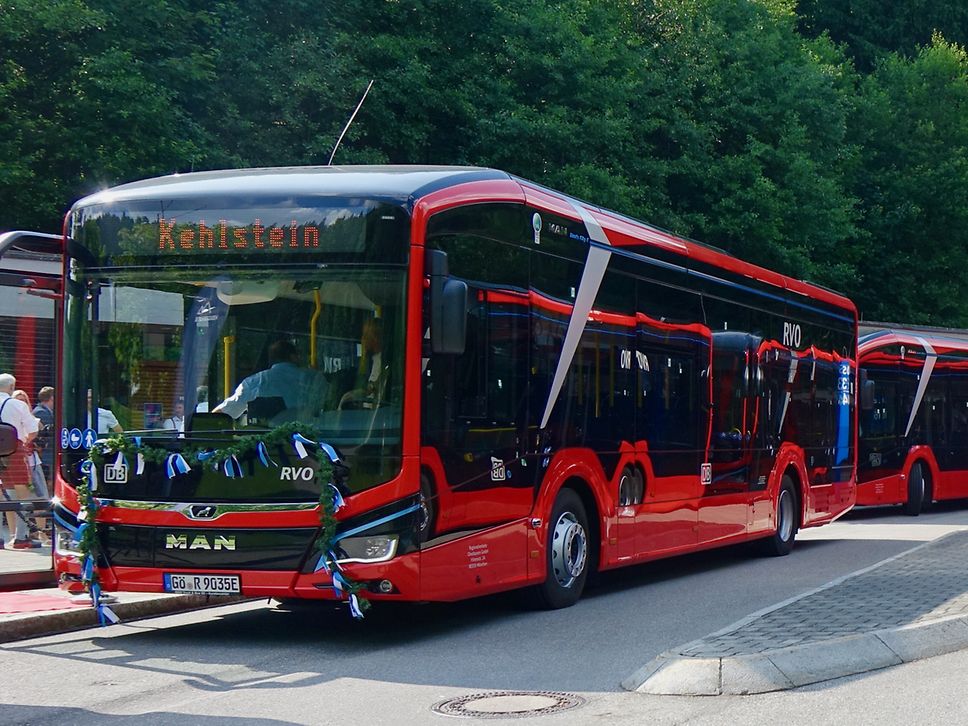
In Berchtesgaden, DB operates electric buses on the Kehlstein line. The vehicles operated by DB subsidiary Regionalverkehr Oberbayern (RVO) climb an elevation difference of approximately 700 meters on this route to the final stop at over 1,800 meters. The buses can recover some of their kinetic energy when braking and driving downhill, thereby recharging their batteries. RVO operates the bus fleet on behalf of the inter-municipal association Erlebnis Berchtesgaden. At the depot in Bischofswiesen, the necessary charging infrastructure, including a substation, was installed in collaboration with DB Energie GmbH.
Additional electric buses are also in service in Bad Tölz and in Oberstdorf in the Allgäu region. For this purpose, DB Energie GmbH has installed its own charging stations in Bad Tölz, for example. By deploying these new buses, DB is gaining experience in electric mobility that will also benefit future tenders.
Electrical local transport in Bocholt
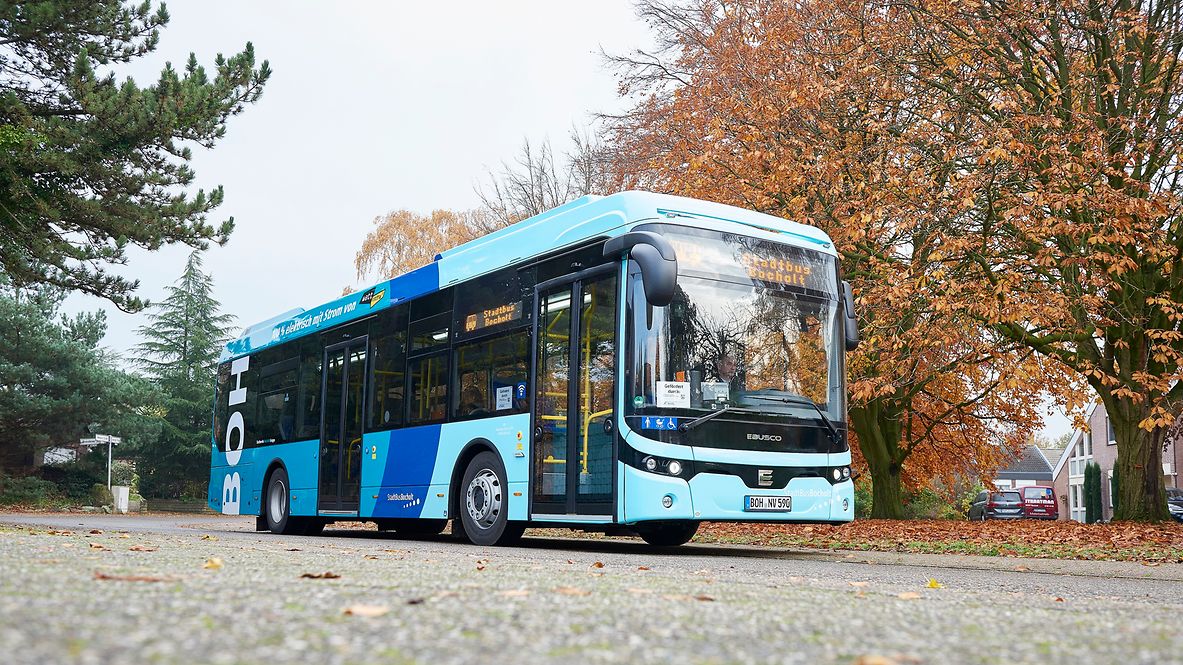
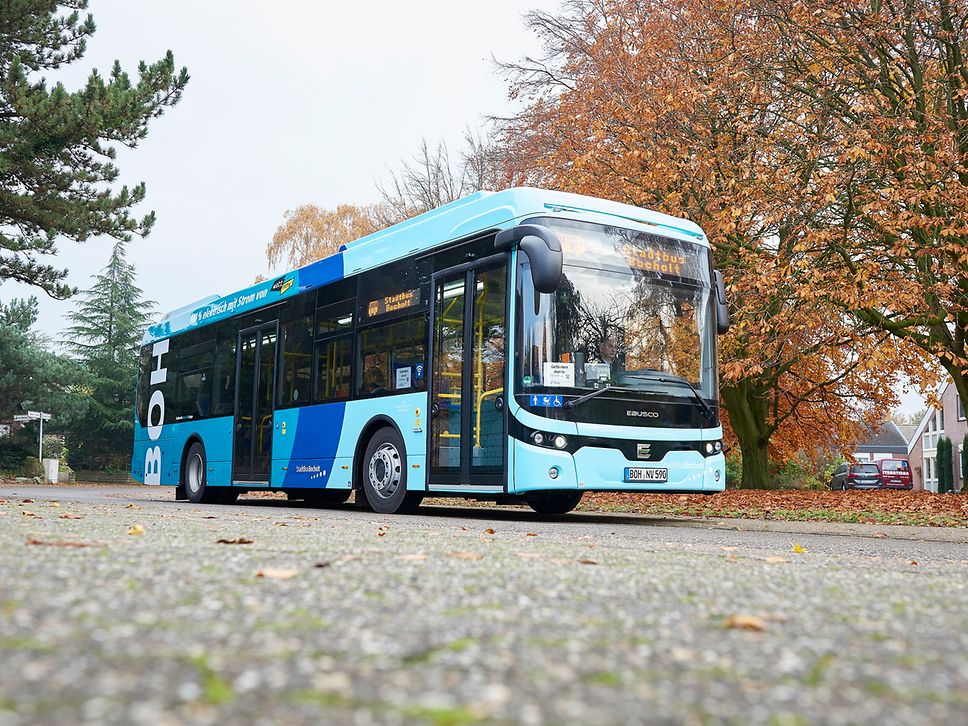
DB Regio Bus North Rhine-Westphalia, in partnership with Stadtbus Bocholt, operates an electric bus in regional urban transport. The EBUSCO bus is powered by electricity from renewable energy sources and can travel about 220 kilometers without recharging. It is recharged overnight. A heat pump cools the bus in the summer and heats the interior in the winter.
 Go
Go