


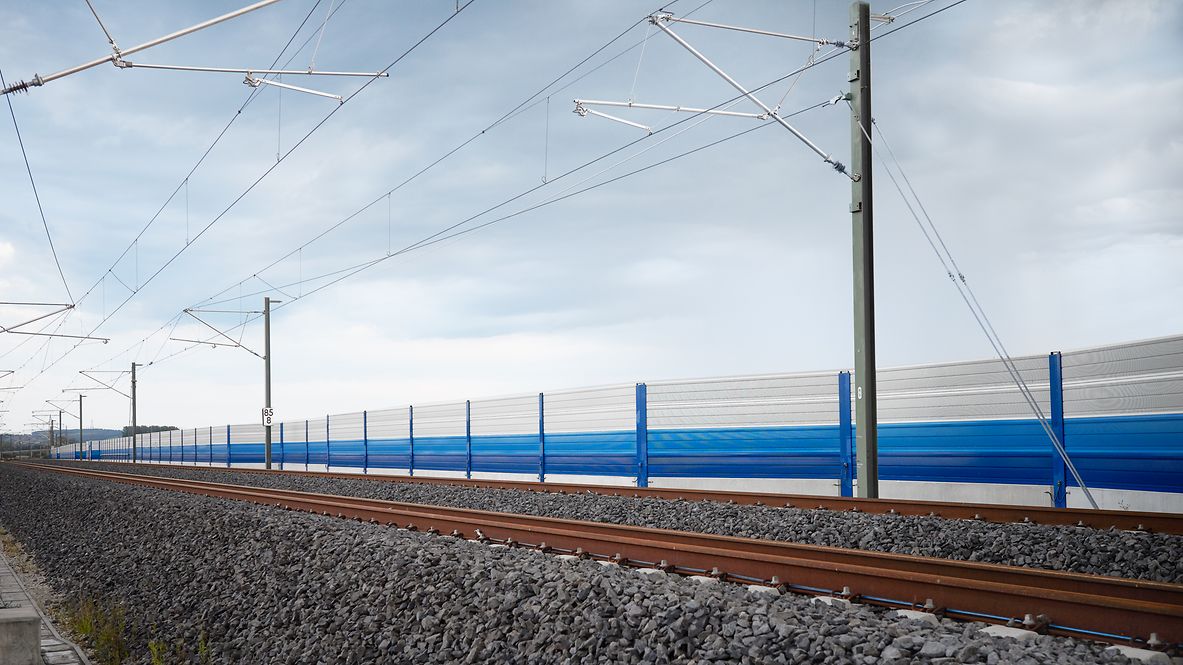
The transportation of goods and passengers by rail is not a silent process. Therefore, as part of noise prevention efforts, DB is legally required to implement appropriate noise protection measures in collaboration with the federal government when building new lines or expanding existing ones. This includes, for example, the construction of noise barriers. But noise barriers are also being installed along existing lines using funds from the federal government’s voluntary noise abatement program. They absorb and shield the noise of passing trains. These measures also include low noise barriers or those made of gabions — that is, wire mesh cages filled with stones.
Design of noise barriers
Based on the guidelines for noise abatement, more elaborately designed and constructed noise barriers can also be funded in certain cases — for example, in areas relevant to tourism. This allows for the respective local appearance requirements to be taken into account and can increase the acceptance of construction projects.
In the area of noise prevention as well, there are plans to erect visually appealing noise barriers in the future, for example as part of the rail connection to the Fehmarnbelt Fixed Link. Transparent building materials can be used at the seven new stops between Lübeck and Fehmarn — or walls bearning municipal coats of arms. Initial examples were presented in Oldenburg (Holstein) in collaboration with the Schleswig-Holstein public transportation association (NAH.SH). Residents were able to vote online on the design of the future noise barriers in the Lübeck urban area. The preferred designs will be incorporated into the next phase of implementation.
Mobile noise barriers are also being used along railroad construction sites.
 Go
Go